They Keep Making History. The World Keeps Missing It.
After another gold medal victory, the U.S. Women’s Hockey Team should have been celebrating unquestioned excellence. Instead, a private conversation revealed a familiar truth: for women in sports, even being the best in the world is not always enough to earn respect. This piece examines the persistent “asterisk” attached to women’s achievements — and what it says about how we value female athletes.
Ginger Gordon
2/26/20263 min read
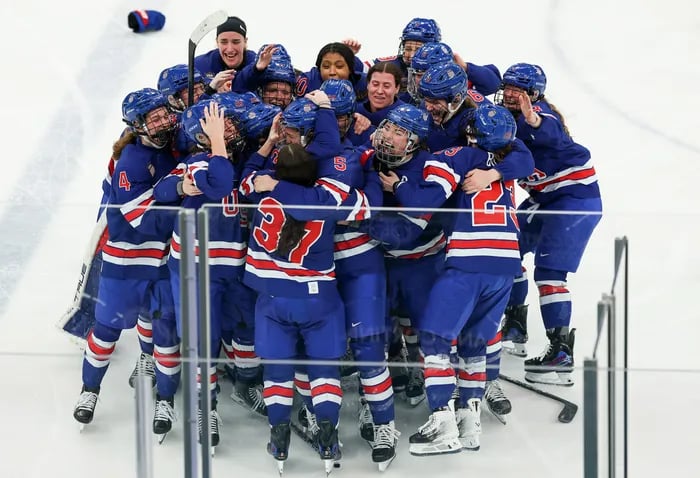
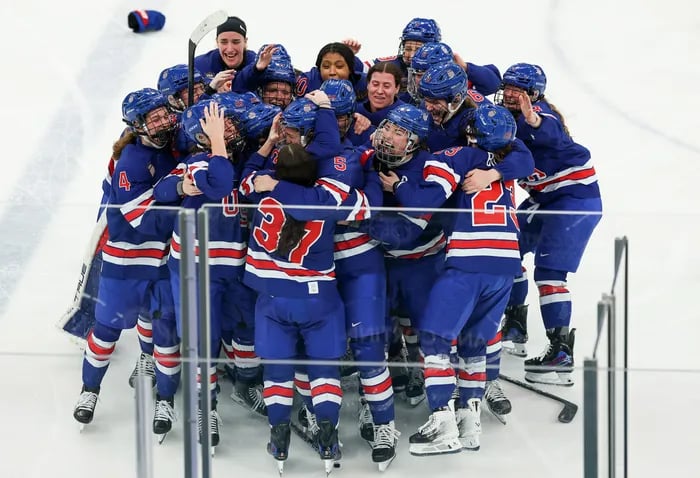
The United States Women's Ice Hockey Team just won a gold medal - again. They dominated the ice, outskated every opponent, and delivered a performance that should have commanded the full attention and full respect of the sports world. Instead of the celebration they earned, however, they found themselves as the punchline in a conversation between the President of the United States and the United States Men's Ice Hockey Team.
And the truth is: this treatment isn’t new. Women and girls in sports have long felt it - that recurring pang when accomplishment meets indifference. You notice it in the small gestures, the subtle signals that your achievements are not as important. The applause is quieter. The scrutiny is louder. The respect is conditional.
What makes this moment distinct isn’t the dismissal itself — it’s the exposure. A private exchange became public, and in doing so, it confirmed something many female athletes have long understood: even indisputable excellence does not guarantee unquestioned respect. Even a gold medal is not enough to earn respect , being the best in the world is still not enough.
48% of female athletes report receiving sexist insults while playing sports
For women and girls in sports, trophies, medals, and records arrive with an asterisk, a “but," a caveat.
They win, but the competition wasn’t strong.
They dominate, but women’s sports aren’t the same.
They break records, but do people even watch?
The “but” is rarely loud. It doesn’t need to be. It lingers in commentary panels, in social media replies, in offhand jokes, in private conversations that were never meant to be public. It reframes objective dominance as something debatable. It suggests that excellence, when achieved by women, requires additional validation.
And that constant qualification has consequences.
When girls grow up watching women win at the highest levels and still see their achievements minimized, they absorb a message that goes far beyond the rink. It tells them that success may not shield them from ridicule, disrespect, or dismissal. That proof may not silence doubt. That even perfection can be treated as provisional. That the pursuit of greatness, through blood, sweat, and tears, could be undone by a laugh and a bias that refuses to break.
This isn’t about demanding applause. It’s about demanding consistency.
If a gold medal represents the pinnacle of achievement - the measurable, undeniable proof of being the best - then it should function the same regardless of who earns it. Respect should not hinge on gender. Recognition should not depend on comparison to men. Excellence should not require an asterisk.
Because when being the best in the world is still not enough, the issue isn’t performance. It’s perception.
So what can YOU do to help?
The question becomes: what can I do about it?
We can start by supporting the U.S. Women’s Hockey Team - and all women’s sports - not just when they win, but consistently, publicly, and loudly. In action, this looks like attending matches, buying merch, interacting with players and teams on social media. Sometimes celebrations are extravagant, like an invitation from Flava Flav to an honorary party in Las Vegas. We all can’t be Flava Flav - but we can cheer loudly, celebrate proudly, and believe wholeheartedly women’s victories are always worth the applause.
We can celebrate girls’ achievements in athletics at every level, from local leagues to the international stage. We can teach our daughters to value strength, skill, and perseverance, and reject phrases like “run like a girl” that diminish effort and potential.
We can hold others accountable - coaches, commentators, friends, and family - when they minimize women’s accomplishments. We can also teach young people, both boys and girls, that excellence deserves respect regardless of gender.
Respect isn’t earned solely through performance; it’s reinforced by the culture around it. By changing that culture, we can ensure that one day, a gold medal will be enough - for everyone.